These days the “feels” usually refers to all the good feels someone has when they love something. But how does one describe the overwhelming feels? Like the traumatic-history-of-the-war “feels”?
Belgium’s history is a war-filled one. It has only been an independent country since 1840, and even in that short time it has been riddled with war, sadness and destruction. In the last two weeks we visited two sites that experienced massive loss, and I have been surprised at each. Pictures when combined with elaborate and historic dialogue about the pictures/era can be very powerful.
Ypres – WWI
First we visited Ypres, site of total destruction from WWI. While the turmoil happened 100 years ago, which is hard to believe, you can still feel it when you visit. Monuments stand as reminders of all that was lost and honor the names of the soldiers that perished here. “To the armies of the British empire who stood here from 1914 to 1918 and to their dead who gave no known grave.” And the In Flanders Fields museum does an excellent job portraying the turmoil so that you can feel it, even if you’re trudging through with a 2 year old.


First we checked out the Ypres cathedral, which also had a mini- museum inside with WWI artifacts from priests and medics. It also had one of my new favorite statues of Jesus. It was a very powerful and moving statue that also envoked the general feeling in the air there.


Then to the In Flanders Fields Museum. The museum had audio guides that let you put in your age so the kids could follow through and learn about the war from someone their age and what they would’ve experienced.
It appears that multiple battles happened in the Flanders fields and in Ypres in WWI, but the heaviest loss was some 500,000 British in less than 100 days in 1917. The city was nearly completely destroyed. The images are incredible and you could really feel a sense for the destruction. And we were standing in the same spots as where this happened.


The last part of the museum had an exhibit with pictures from the war overlayed with current images of the same areas – mostly with farmers on their land. The biggest take away from this is that the farm fields are still riddled with artillery shells that haven’t exploded yet and still pose threats to those areas.
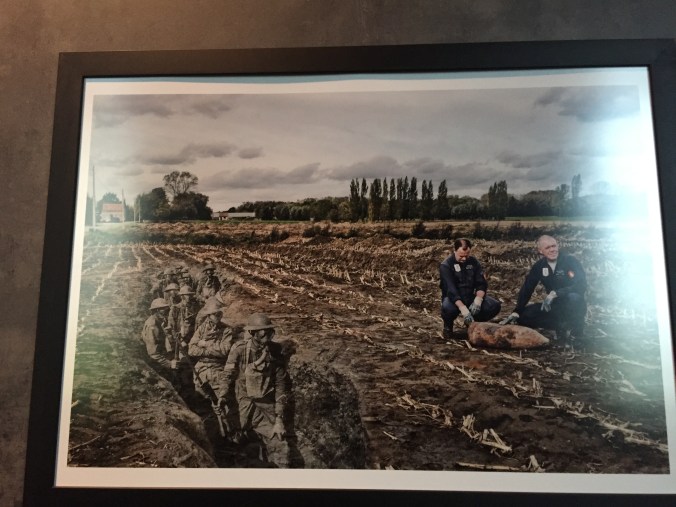
Overlay of current image over image from the war. Shows and unexploded shell recently uncovered.
Finally, the famous poem from 1915 about the area, “In Flanders Fields” by John McCrae 👇🏻. After the war ended, the poppy was adopted by the city as a symbol of remembrance. Everywhere in the city sold poppy merchandise and I’m kind of kicking myself for not buying some! Don’t worry, I’ll go back 😉. On another note, the poppies aren’t just in Flanders (the northern part of Belgium). We have a fair share here in southern Belgium and they’re beautiful.
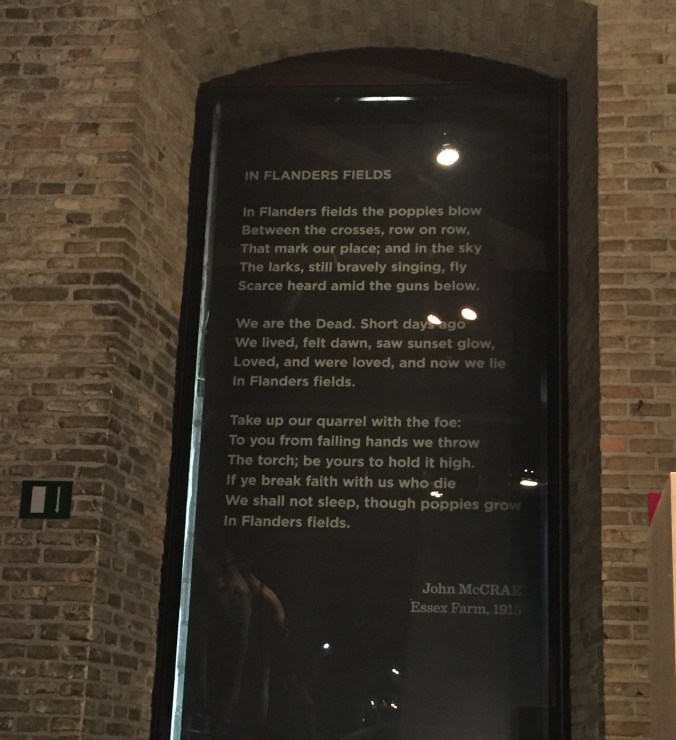
“In Flanders Fields”, a famous poem by John McCrae about the WWI
Bastogne – WWII
Next we went east to Bastogne, which was part of the Battle of the Bulge in WWII, which is really when America showed up in full force and helped fight Germany when the other troops were at their lowest.
The Bastogne War museum was amazing where the audio guides and movies walk you through the war and really put you in the action. The movie I saw was in 3D on the battlefield . Justin saw another one that was set in the winter months and they sat on logs and the room temperature drops while the movie is playing.
There was so much to learn there and so much I didn’t know. It’s a beautiful tribute to a very sad and complex war. I wish I could elaborate more on what I saw but I know I don’t have the right words to describe it. I didn’t take as many picturess as I would have liked, but I a few are below. Any WWIII and history buffs should definitely add this museum to a list of must sees.
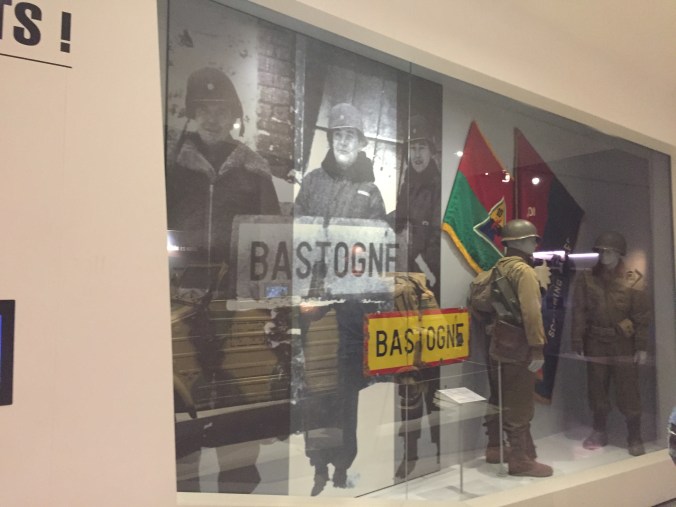
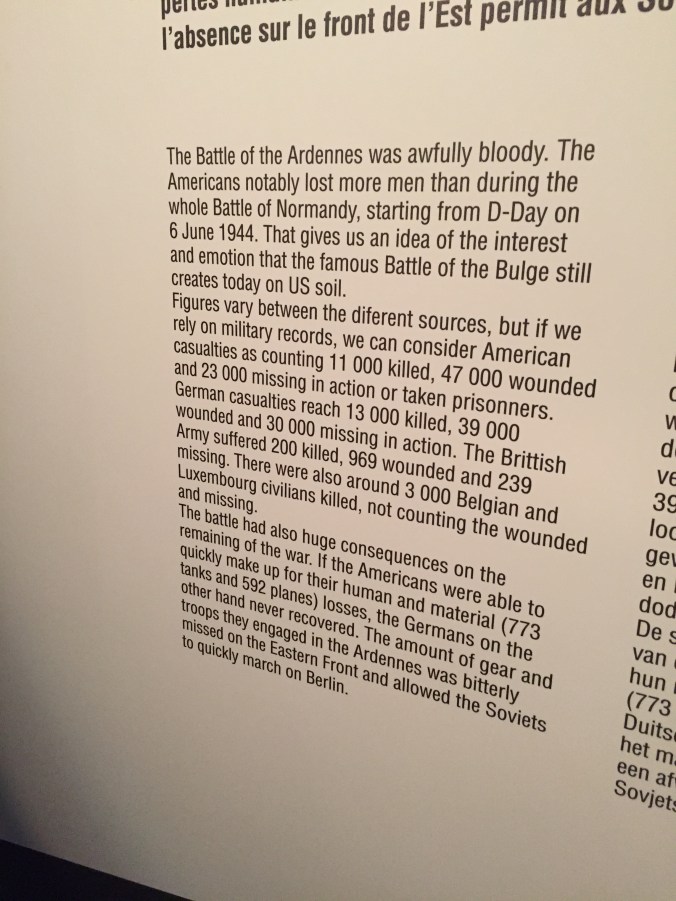
Battle of the Ardennes as part of the battle of the Bulge happened December 1944 and January 1945 and basically left Germany defeated.
After the battle of the Ardennes, Germany was basically defeated. A few efforts remained but were unsuccessful and the axis powers were defeated and their leaders killed/committed suicide.
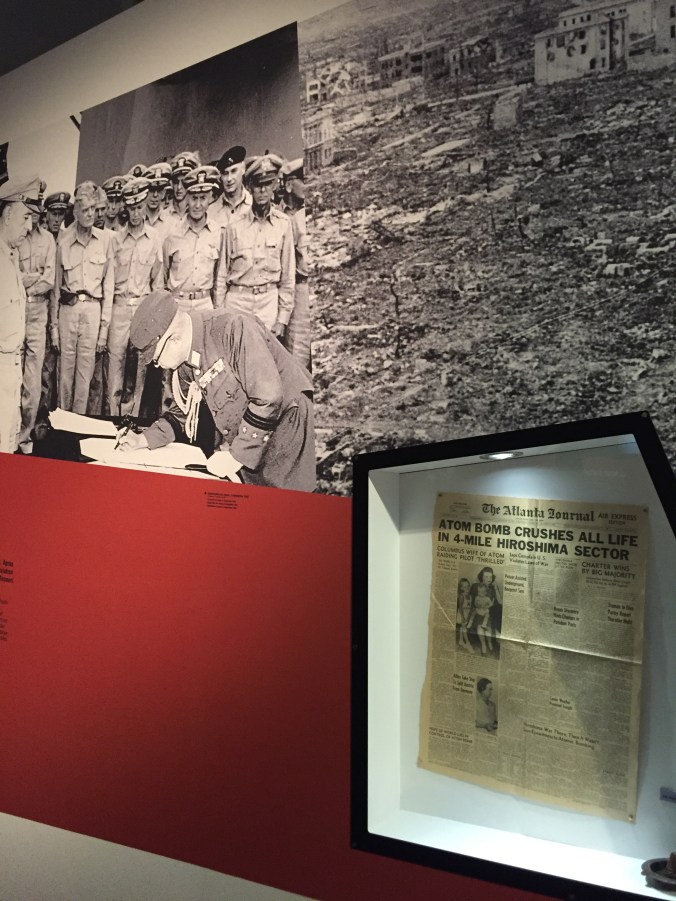
Imperial Japan officially signs end to the wa, months after Mussolini and Hitler were defeated and died.
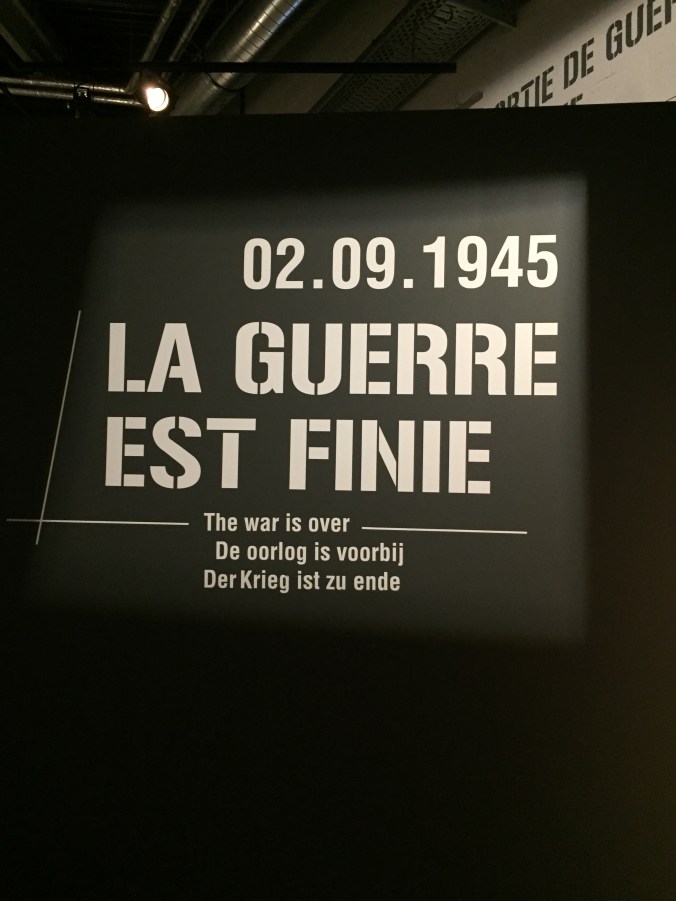
Sept 2, 1945 – the war is over! 36 years before I was born. I’ll be 36 this year. Somehow, 72 years doesn’t seem that long ago.
Next up…
When I found out we were moving to Europe, I knew we’d see all the historic battle sites and museums since Justin is a war and history buff. I still somehow pictured myself more just looking at old buildings and pretty scenery, not actually realizing how much history is here, especially in Belgium. It’s pretty moving and overwhelming. I am excited to see more, but especially to see the one part of WWII that I am familiar with – Anne Frank. Two months ago I booked tickets to see the Anne Frank House in Amsterdam and I am excited to go this weekend and see it for my birthday!
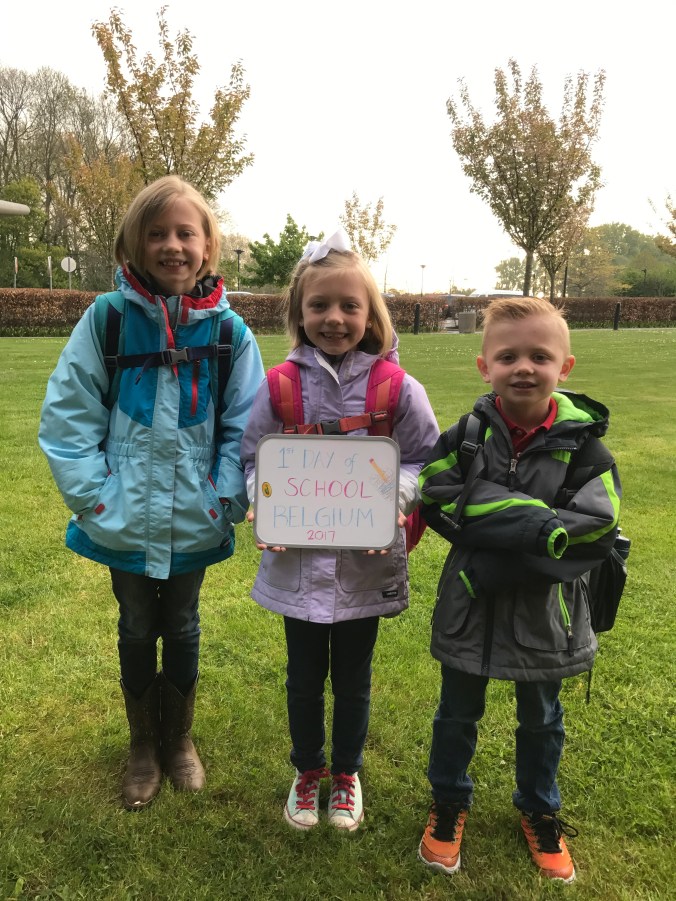
 We’re 3 days in to the new school year here and possibly the new “normal” routine. The kids finished the last 6 weeks of school here last year, but we never really got to the normal part since I didn’t have a car or even a cell phone for a good portion of that.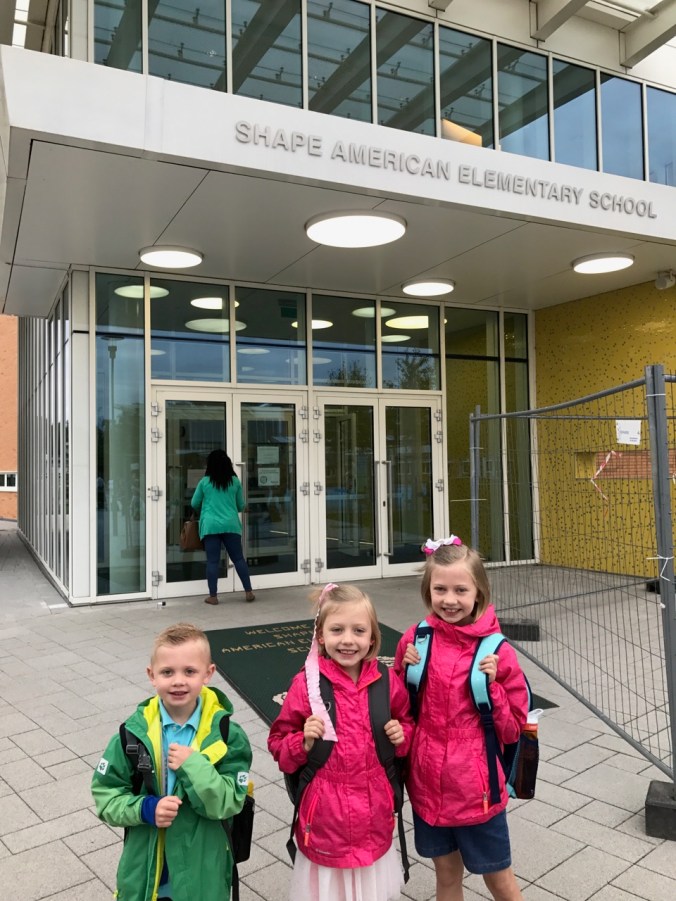







 Cobbled